
Toxic Household Items for Dogs: Hidden Dangers Every Owner Should Know
Your home feels safe.
But for your dog, everyday items can pose hidden risks, often in places you don’t think twice about.
From cleaning products to common plants, many household items can cause serious harm if ingested, inhaled, or even touched.
This guide breaks down what to watch for, where the risks hide, and how to prevent accidents before they happen.
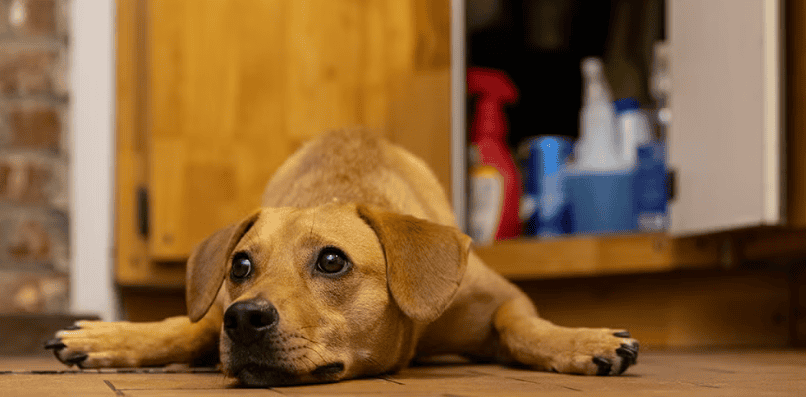
Image by ASPCA
If your dog suddenly seems off or low-energy, it may be more than just fatigue, always check for possible exposure.
Why Household Items Are More Dangerous Than You Think
Unlike food, these dangers are:
- Unpredictable
- Easy to access
- Often odorless or appealing to dogs
And most importantly…
They’re not always obvious.
Many incidents happen when:
- You’re cleaning
- You leave something out briefly
- Your dog explores out of curiosity
Common Toxic Household Items for Dogs
Cleaning Products
- Bleach
- Disinfectants
- Floor cleaners
Risk: Burns, poisoning, respiratory irritation
Medications (Human & Pet)
- Pain relievers
- Antidepressants
- Vitamins
Risk: Overdose, organ damage
Household Plants
- Lilies
- Aloe vera
- Sago palm
Risk: Toxic ingestion, vomiting, organ failure
Pest Control Products
- Rat poison
- Insect sprays
- Flea treatments (incorrect use)
Risk: Severe poisoning, neurological damage
Essential Oils & Diffusers
- Tea tree
- Eucalyptus
- Peppermint
Risk: Toxic fumes, skin irritation
Laundry & Detergents
- Pods (highly concentrated)
- Fabric softeners
Risk: Burns, digestive distress
Trash & Leftovers
- Moldy food
- Packaging
Risk: Toxic ingestion, blockages
Symptoms of Toxic Exposure in Dogs
If your dog gets into something dangerous, symptoms can appear quickly.
Watch for:
- Vomiting or diarrhea
- Drooling or excessive salivation
- Lethargy or weakness
- Tremors or seizures
- Difficulty breathing
- Loss of coordination
These signs require immediate attention.
What To Do If Your Dog Is Exposed
This is not a wait-and-see situation.
1. Remove your dog from the area immediately
Prevent further exposure.
2. Identify the substance
Know what they came into contact with.
3. Contact your veterinarian or emergency clinic right away
Time matters.
4. Do NOT attempt home remedies unless directed
Some actions can make it worse.
The Hidden Pattern Most Owners Miss
Accidents don’t usually happen because of one big mistake.
They happen because of:
- Open access
- Inconsistent routines
- Lack of clear boundaries
Dogs explore based on opportunity, not judgment.
Many of these risks don’t happen in isolation. They overlap with everyday habits, especially around feeding.
Learn which foods to avoid in our Dangerous Foods for Dogs guide.
How to Prevent Exposure with the T.A.I.L. Framework™
This is where structure protects your dog.
T — Trigger
Identify when risk appears, such as cleaning, cooking, guests, or open cabinets
A — Anchor
Create a calm, controlled state before exposure
I — Interrupt
Pause curiosity behaviors before they become unsafe
L — Link
Guide your dog toward a safer alternative, such as place, crate, or distance
When the pattern is consistent, your dog has a clearer path to follow when new or risky situations appear.
For everyday prevention, start by noticing the patterns that put your dog at risk. The Tail Method™ can help you build calmer routines around the moments where safety, structure, and consistency matter most.
What Success Looks Like
- A safer home without constant stress
- Your dog ignores harmful items
- No frantic reactions during routines
- Calm behavior around cleaning, food prep, and new objects
Safer Cleaning Alternatives for a Dog-Friendly Home
Many store-bought cleaning products contain chemicals that can irritate your dog’s skin, paws, and respiratory system.
The good news?
You don’t have to choose between a clean home and a safe one.
Simple, natural alternatives can reduce exposure while still keeping your environment fresh and sanitary.
Dog-Safer Cleaning Options to Consider
- White vinegar – helps break down grease, odors, and buildup
- Baking soda – effective for deodorizing carpets and surfaces
- Lemon – natural antibacterial properties with a fresh scent
- Castile soap – gentle, plant-based cleaning option
These ingredients can be used individually or combined into simple DIY solutions for everyday cleaning.
For additional guidance, organizations like the ASPCA provide detailed resources on pet-safe household products and toxic substances to avoid.
Important Note
“Natural” does not always mean completely safe.
Some dogs are sensitive to strong scents or certain substances, especially when concentrated.
Always:
- Keep your dog away while cleaning
- Allow surfaces to dry fully
- Avoid direct contact with paws, nose, or mouth
Why This Matters More Than You Think
Exposure doesn’t only happen through ingestion.
Dogs absorb substances through:
- Their paws
- Licking surfaces
- Breathing in airborne particles
Reducing chemical exposure lowers long-term risk even in small, everyday moments.
Credible Guidance on Pet-Safe Cleaning
Organizations like the American Society for the Prevention of Cruelty to Animals (ASPCA) emphasize the importance of choosing pet-safe household products and minimizing exposure to harmful chemicals.
Final Thoughts
Danger isn’t always obvious.
But prevention is always possible.
The more structure you create, the fewer risks your dog will ever face.
Start building safer daily habits with the Calm Dog Blueprint.
FAQ on Toxic Household Items for Dogs
What household items are most toxic to dogs?
Cleaning products, medications, certain plants, and pest control substances are among the most common.
Can dogs recover from toxic exposure?
Yes, but quick action is critical. Contact a veterinarian immediately if exposure is suspected.
How do I keep my dog safe from toxic household items at home?
The best way to protect your dog is by creating a safe, structured environment. Store cleaning products, medications, and chemicals in closed cabinets or high shelves, and keep trash bins secured with lids. Avoid leaving food, plants, or small objects within reach, especially in areas your dog frequently explores. Regularly check your home for potential hazards and build consistent routines so your dog learns what areas and items are off-limits—an important part of maintaining a safe and calm environment.
The Tail Method™ and T.A.I.L. Framework™ (Trigger, Anchor, Interrupt, Link), including associated methodologies and materials, are proprietary to Tail Wisdom LLC. This framework may not be copied, reproduced, distributed, redistributed, modified, republished, or used in any form without prior written permission.